
Grand Traverse County Arrest Warrants Explained
An arrest warrant lets an officer take someone into custody and bring them before a magistrate. It grows out of a criminal complaint, not a missed hearing. Reasonable cause must come first. Grand Traverse County courts do not issue one on a caller's say-so. Michigan leans toward a summons instead. A prosecutor or magistrate may still pursue a warrant for an assaultive or domestic-violence allegation, a reason to doubt the person will appear, a public-safety concern, or simply at the prosecutor's request. The court's choice controls. Confirm which path your case took.
The Grand Traverse County Arrest Warrant Complaint Path
An officer or prosecutor builds the facts into a complaint. Someone swears to it before a magistrate or court clerk. The judicial officer then reviews it for reasonable cause. Only then can a warrant or summons issue. Grand Traverse County felonies follow a set local route. Prosecutors authorize felony offenses punishable by more than a year. The case moves to the 86th District Court for arraignment and a preliminary examination, and, if the evidence holds, it is bound over to the 13th Circuit Court for trial.
Inside a Grand Traverse County Arrest Warrant
No county page shows a fixed field list. Grand Traverse County arrest warrants vary in format. What follows is what a court can explain about a case, not what any screen displays.
| Complaint and charge | The offense alleged and the statute cited in the charging document |
|---|---|
| Issuing judicial officer | The judge or magistrate who reviewed reasonable cause |
| Case number | The court file that carries the warrant event in its register of actions |
| Bond or release term | Set by the court, then confirmed with the court before any payment |
| Return and service events | Entries showing whether the warrant was served and what happened next |
A Michigan warrant orders an arrest. It brings the person before a magistrate. It also carries return information, so ask the Grand Traverse County court which of these details appear in the public file.
Booking and Bond for Grand Traverse County Arrest Warrants
Booking happens at the Grand Traverse County Correctional Facility, 320 Washington Street. Corrections runs custody, local-warrant pickups, and court services. It answers intake and release questions, not legal ones. The Corrections Division page posts the jail contact block and public-hours information.
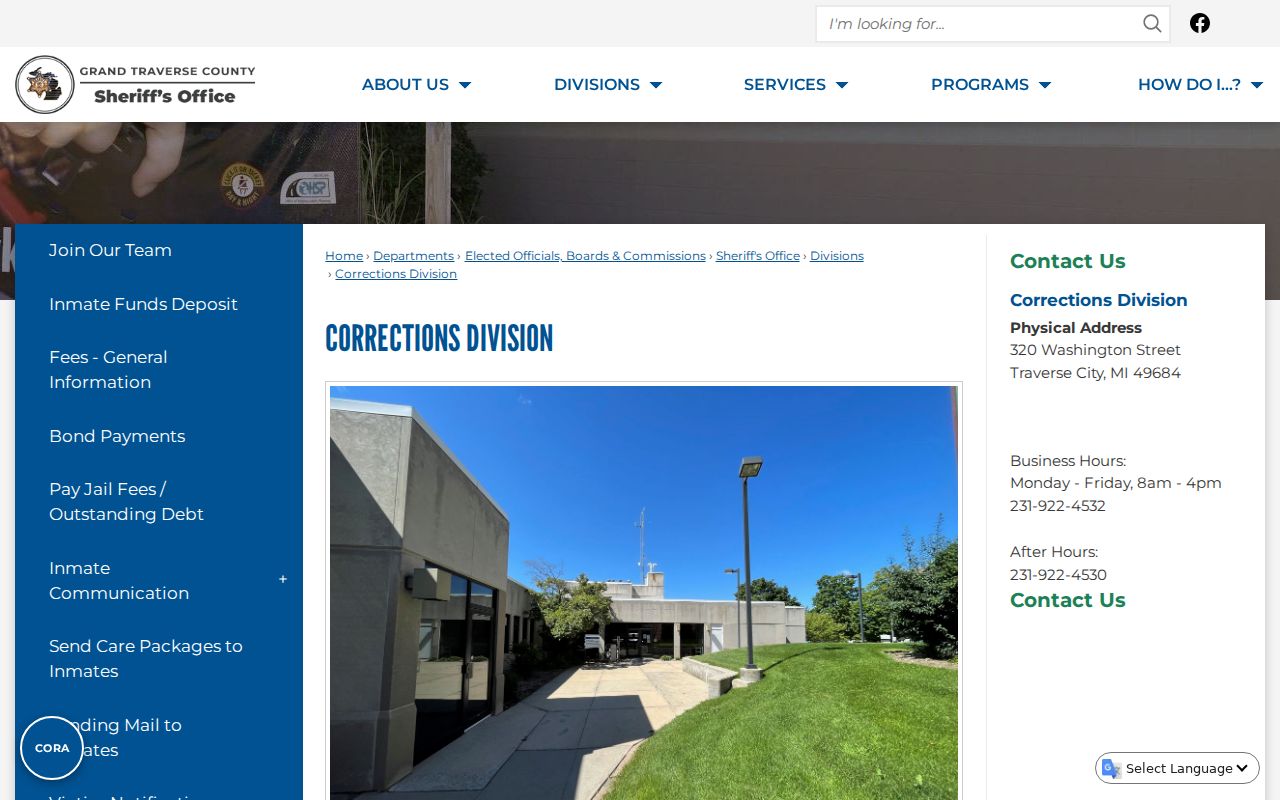
Court bond and jail bond go to different places. In Grand Traverse County, the county bond page lists the online account, the 24-hour phone line, and the round-the-clock lobby kiosk.
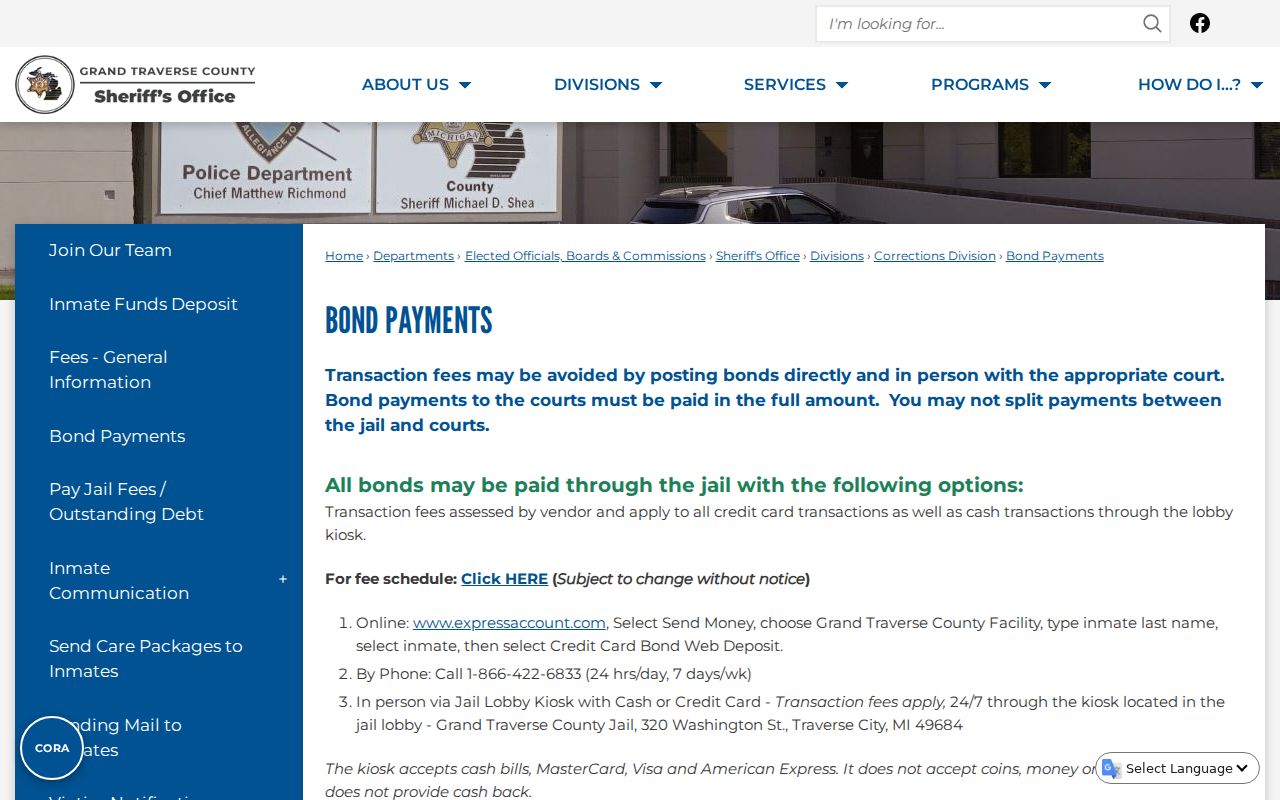
Court bond must be paid in full. No split between jail and court is allowed. Most Grand Traverse County releases happen the same day bond posts, though conditions can delay release by several days.
Serving Arrest Warrants in Grand Traverse County
Who serves a warrant depends on the holding agency. Sheriff's deputies can execute one. So can Traverse City police. So can other authorized peace officers. Jail staff pick up people arrested on local warrants or court orders. Grand Traverse County publishes no service-assignment chart, no warrant-unit roster, and no geographic priority list, so no page can tell you which officer is looking for whom. Ask the holding agency.
Bindover Records for Grand Traverse County Arrest Warrants
A felony case can live in two court files. That trips up anyone expecting one record. Before bindover, the 86th District Court holds the paperwork, the arraignment, and the preliminary examination. After bindover, the 13th Circuit Court holds the case. The county clerk maintains that file. So a Grand Traverse County felony lookup should be run twice. The district court, at 231-922-4580, answers for the early case. For the file after bindover, call the circuit court at 231-922-4701 or the clerk's circuit records office at 231-922-4710. Searching the circuit index alone will miss a recent district-stage case. Remember, the circuit index is a case index, not a warrant status report.
Comparing Arrest, Summons, and Bench Warrants
In Grand Traverse County, arrest warrants, summons orders, and bench warrants do different jobs, and mixing them up sends you to the wrong office first.
| Tool | What Starts It | What It Requires |
|---|---|---|
| Summons | A sworn complaint and a reasonable-cause finding | A court appearance on a set date, with no arrest |
| Arrest warrant | A complaint plus a statutory exception to the summons preference | An officer takes the person into custody |
| Bench warrant | A missed date or unmet obligation in an existing case | Enforcement of the court's earlier order |
| Search warrant | An affidavit describing a place or property | Authority to search or seize, not to arrest |
Michigan's preference for a summons is the practical point. A complaint does not mean an officer is coming. Confirm with the Grand Traverse County court which tool it chose instead of assuming.
Federal Warrants in Grand Traverse County
Grand Traverse County sits in the Western District of Michigan. Federal warrants follow federal procedure, not county channels. A federal magistrate judge issues an arrest warrant on a complaint or in connection with an indictment. Federal dockets run through PACER. It charges $0.10 per page with a cap per document. The free CourtListener service covers contributed documents too. Neither is a warrant lookup, and sealed complaints, sealed indictments, and unserved warrants may not show at all.
If There Is an Arrest Warrant for You
Confirm the case with the issuing court before deciding anything. Ask whether a warrant was entered. Ask what the bond term is. Also ask whether a voluntary appearance can be arranged with or without an attorney, which a Grand Traverse County court can sometimes allow.
Important: Talk with a lawyer before a voluntary surrender, and confirm the bond amount and destination with the court rather than a caller.
The district bond page warns Grand Traverse County users directly. Its payment remote is not for traffic tickets or ordinary criminal-case payments.
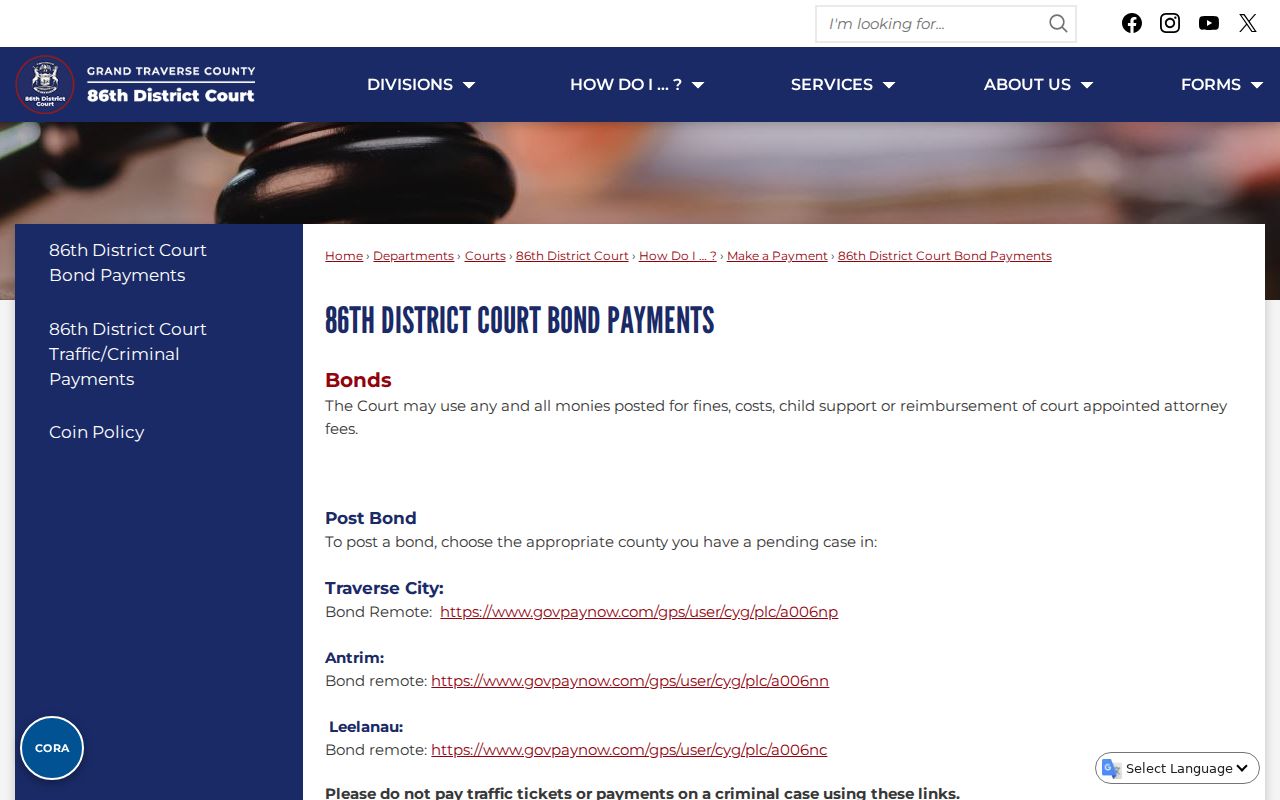
A Grand Traverse County judge may order you to turn yourself in. Call Corrections first. Confirm intake and timing, then post bond as the court directs. Bond buys release and a future court date; the charge itself still stands.
Agency Records for Grand Traverse County Arrest Warrants
Sheriff records and court records answer to different keepers in Grand Traverse County. The agency that created a record owns it. A police report, incident record, or warrant-service entry needs a Michigan Freedom of Information Act request. The sheriff's FOIA form asks for your contact details, a record description, a delivery preference, and an electronic signature. The county's FormCenter page lays out each field before you submit.
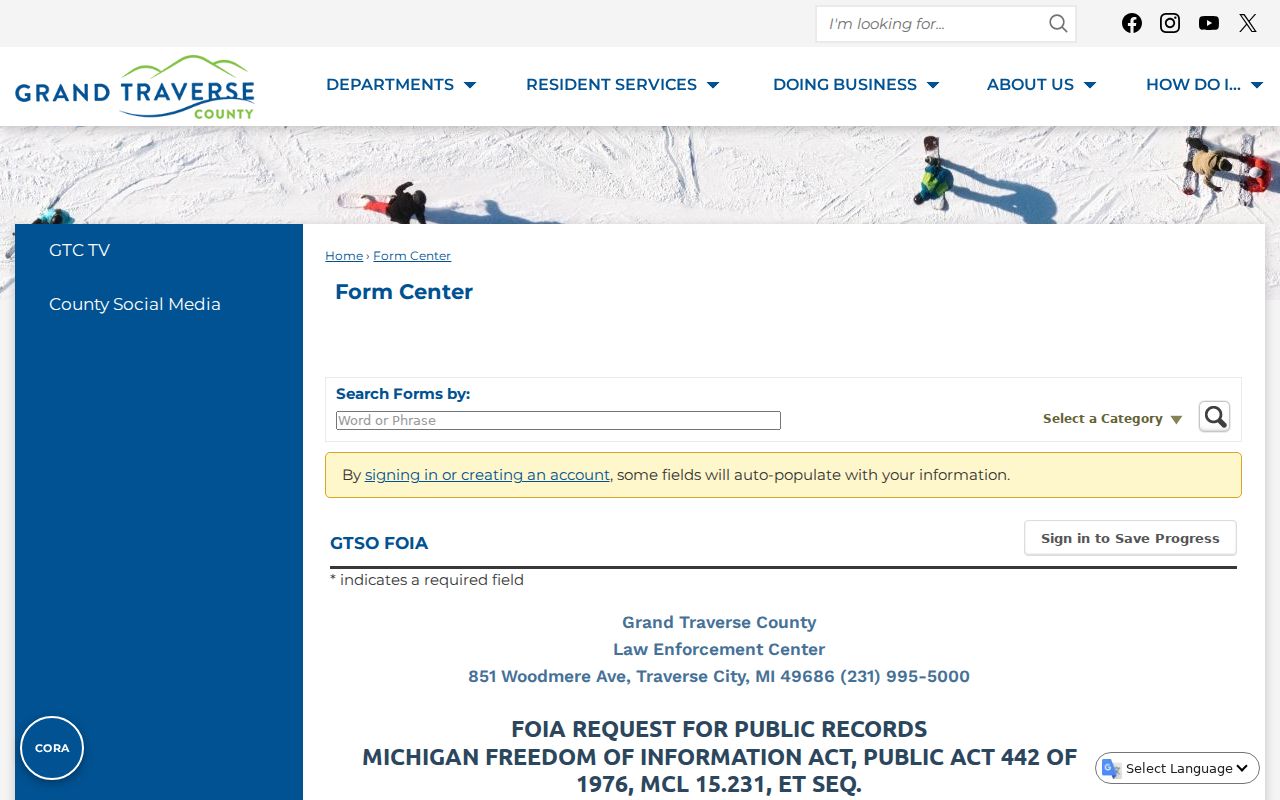
The county also accepts FOIA requests by fax at 231-995-5010 or by mail to 851 Woodmere Avenue. Expect an answer within five business days, with one possible ten-business-day extension. Fees come due before release. Court files are different; they follow the Michigan Court Rules and the issuing court's own review process, not FOIA.