
Checking for a Warrant in Fife Lake
Fife Lake cases all land with county agencies. Start any warrant check with the district court that docketed the case, then the sheriff's office that served the order.
- Read the notice for the court name, the citation number, and the date.
- Search the statewide case tool for a first view of the docket.
- Use the district ticket search if the matter was a payable citation.
- Call the 86th District Court at 231-922-4580 about a default, a missed date, or a bench warrant.
- Call the sheriff's office at 231-995-5000 for records and enforcement routing.
Note: A Fife Lake village clerk can confirm a village record, and only the court can confirm whether a warrant exists.
Fife Lake Policing and Warrant Records
The village's own contact page is blunt about policing here. It lists village administrators first. Then it names a county sheriff's deputy as the community policing contact. The page documents a service arrangement, not a warrant lookup.
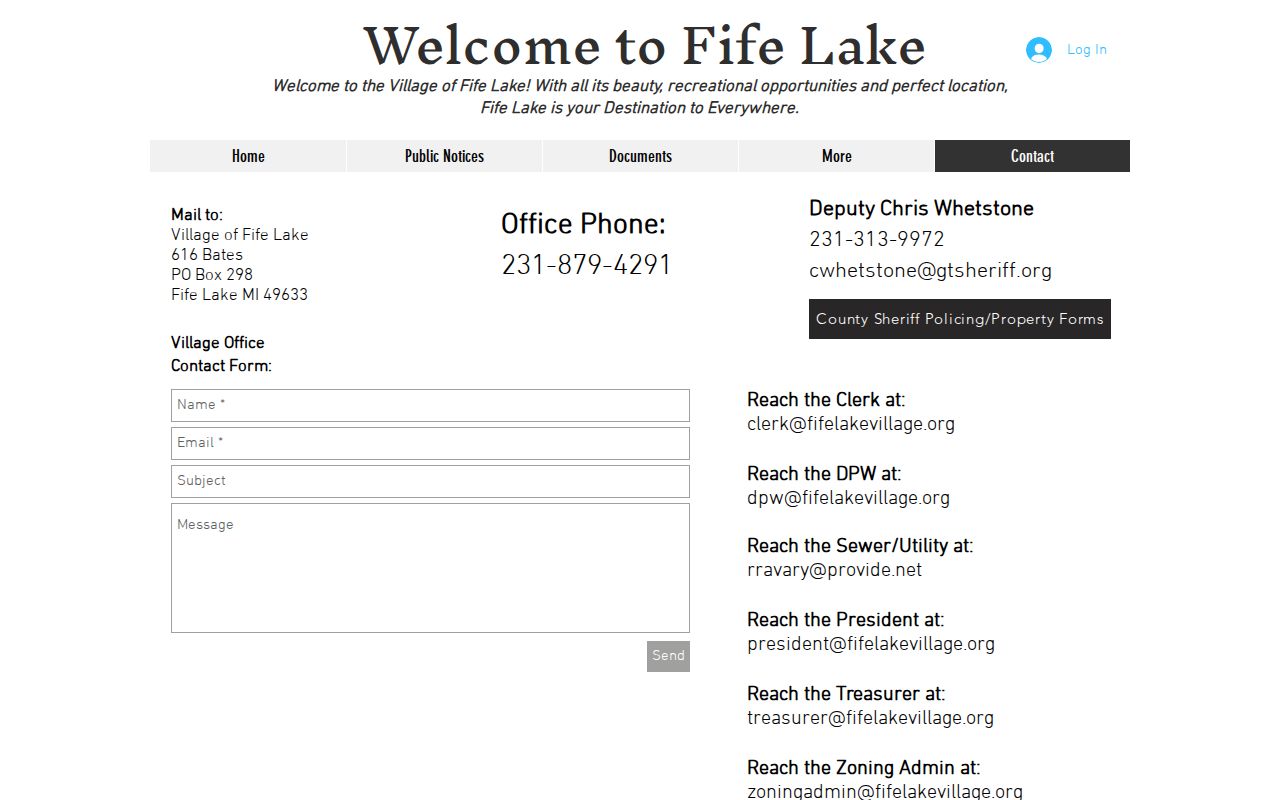
That listing tells a Fife Lake resident where a police question goes. Enforcement, property checks, and local incidents run through the deputy and the sheriff's office. Court dates, fines, and any warrant stay with the district court.
Fife Lake Police and Municipal Court
Fife Lake has no police department and no municipal court of its own. County deputies handle the policing. The 86th District Court then hears the local ordinance, traffic, and misdemeanor cases that follow. The practical rule for a resident is simple: a village name on a ticket does not create a village case. The citation number resolves to a county docket. That county docket is where a warrant would appear.
The Fife Lake Warrant Route: One Deputy, One Millage
Fife Lake is the smallest incorporated place in Grand Traverse County, with 456 residents counted in the 2020 Census. Small size shapes how service gets delivered here. An official area plan describes police protection for the township as a county sheriff function supported by a local millage, with one deputy assigned to Fife Lake Township and Fife Lake Village. The village contact page names a community deputy who works that coverage. Understand that model before you call. The deputy handles local enforcement and community questions. Warrant status, bond amounts, and court dates belong to the court system instead.
Fife Lake Warrant Types
A Fife Lake citation produces the same court orders as any other county case. One court handles them all.
| Type | How It Arises | Who Issues It |
|---|---|---|
| Ordinance bench warrant | A missed local ordinance appearance | A district court judge |
| Traffic warrant | An unanswered citation or missed traffic date | A district court judge |
| Fish and recreation violation | A missed court date on a conservation citation | The court that set the case |
| Arrest warrant | A charge filed after a sheriff investigation | A judge or magistrate on probable cause |
Conservation and recreation citations are the local wrinkle. The lake and the state land around it draw enforcement from more than one agency.
Why the Fife Lake Deputy Is Not a Warrant Hotline
A named deputy on a Fife Lake village page looks like a direct line to answers. It is a community contact, not a warrant desk. The deputy can take a report, explain coverage, and route a resident toward the right office. A warrant question still goes to the issuing court, because only that court can read the case file and say whether an order is open, recalled, or dismissed. Calling the deputy first is not wrong. It can save time on a service question. Just do not expect a warrant confirmation from that number.
Inside a Fife Lake Warrant Record
A Fife Lake citation that becomes a court order lives in a Grand Traverse County court file, not in any village drawer.
| Citation number | The identifier printed on the notice issued in the village |
|---|---|
| Case number | The district court file created after the citation was docketed |
| Charge or event | The ordinance, traffic, or conservation matter named in the notice |
| Fine, cost, or bond | Set by the court and confirmed before any payment |
| Status entry | The register line showing a default, a warrant, a recall, or a dismissal |
A Fife Lake warrant record lives in two places. The sheriff keeps the incident report; the issuing court keeps the case file.
Fife Lake Warrant Records: Four Different Offices
Fife Lake sits inside a township of the same name. The two governments are separate from the county agencies that serve them. Mixing them up is the usual reason a records call goes nowhere.
| Village of Fife Lake | Village hall at 616 Bates for administrative business |
|---|---|
| Fife Lake Township | Township government for township roads and services |
| Sheriff's Office | Enforcement, reports, and records for the area |
| 86th District Court | Court dates, fines, and warrants for the cases |
The Fife Lake village office and the township office can both point a resident in the right direction. Neither one controls a court case.
A Fife Lake Ticket Notice and Warrant Risk
A ticket issued in the village follows the county path. The citation carries a court name and a response date, and the response decides what happens next. A payable ticket can be settled through the state ticket search. A missed date can produce a default, an order to show cause, or a bench warrant. When that happens, the fix belongs to the court. The job is finding out which of those events the judge entered. The traffic warrant search page covers the ticket sequence in detail, and the county warrant records home page covers the felony and family routes for Fife Lake readers.
How Fife Lake Warrants Fit the County System
Once a Fife Lake court order exists, the case moves through county machinery. Every other local warrant follows the same route.
Warrant flow: Fife Lake citation › 86th District Court › sheriff service › county jail booking in Traverse City.
The village of Fife Lake contributes a location and a local contact. The court, the sheriff, and the jail do the rest. Plan on a surrender trip running south to Traverse City rather than to a village office.
Fife Lake Warrant Records Held by the Sheriff
Incident reports tied to Fife Lake sit with the sheriff's office, not the village. Michigan's Freedom of Information Act governs their release. The county's FOIA page takes requests online, by fax, or by mail, and it allows a five-business-day response plus one ten-business-day extension. Expect itemized fees. Payment comes before release. For a court case file instead, the district file-review form is the right route, so name the village, the approximate date, and the record you want in any FOIA request.
Fife Lake Warrant Records and Public Access
Fife Lake warrant records split into agency files and court files, each under different laws, and neither body publishes a public wanted list.
Key rules: Michigan's Freedom of Information Act covers sheriff and village records, and court files follow the Michigan Court Rules instead, including the access standard in MCR 8.119.
Family and juvenile records face extra limits under MCL 712A.28. Those cases stay closed. A Fife Lake resident with a support or custody question should call the Friend of the Court or the Family Division, not the village hall.