
Grand Traverse County Traffic Warrants Explained
A traffic warrant is an order, not paperwork on the ticket itself. When a Grand Traverse County driver ignores a citation, a judge can sign a bench warrant inside that same case file, and the order empowers an officer to bring the driver before a magistrate. It differs from an arrest warrant tied to a new charge, since it enforces a case the court already holds. Michigan separates the procedure. MCR 6.615 generally requires an order to show cause first, while MCL 257.744 demands a sworn complaint before a civil-infraction warrant issues.
From Citation to Grand Traverse County Traffic Warrant
Traffic matters land at the 86th District Court, which serves Grand Traverse, Antrim, and Leelanau counties. That means most local tickets sit in one Grand Traverse County courthouse.
Ticket flow: citation issued › answer or pay by the notice date › missed date or unpaid judgment › show cause or bench warrant › payment, date, bond, or recall.
Timing matters. Under MCR 6.103, a first ordinary missed date buys about 48 hours, weekends and holidays excluded, to appear voluntarily before a warrant is entered. A prior failure to appear can cut that window short for a Grand Traverse County driver.
Checking for a Traffic Warrant
Four channels answer traffic questions in Grand Traverse County. Portals locate the case, the clerk confirms warrant status, and the jail explains any arrest.
- Open the statewide ticket search and select Grand Traverse County and the 86th District Court.
- Look up the citation by last name and ticket number, or by last name and birth date.
- Run the same name through the court case search for a wider view.
- Call the 86th District Court at 231-922-4580 about an FTA or bench warrant.
- Request the file copy when you need the register of actions.
The 86th District Court page lists a walk-in magistrate window for Grand Traverse County.
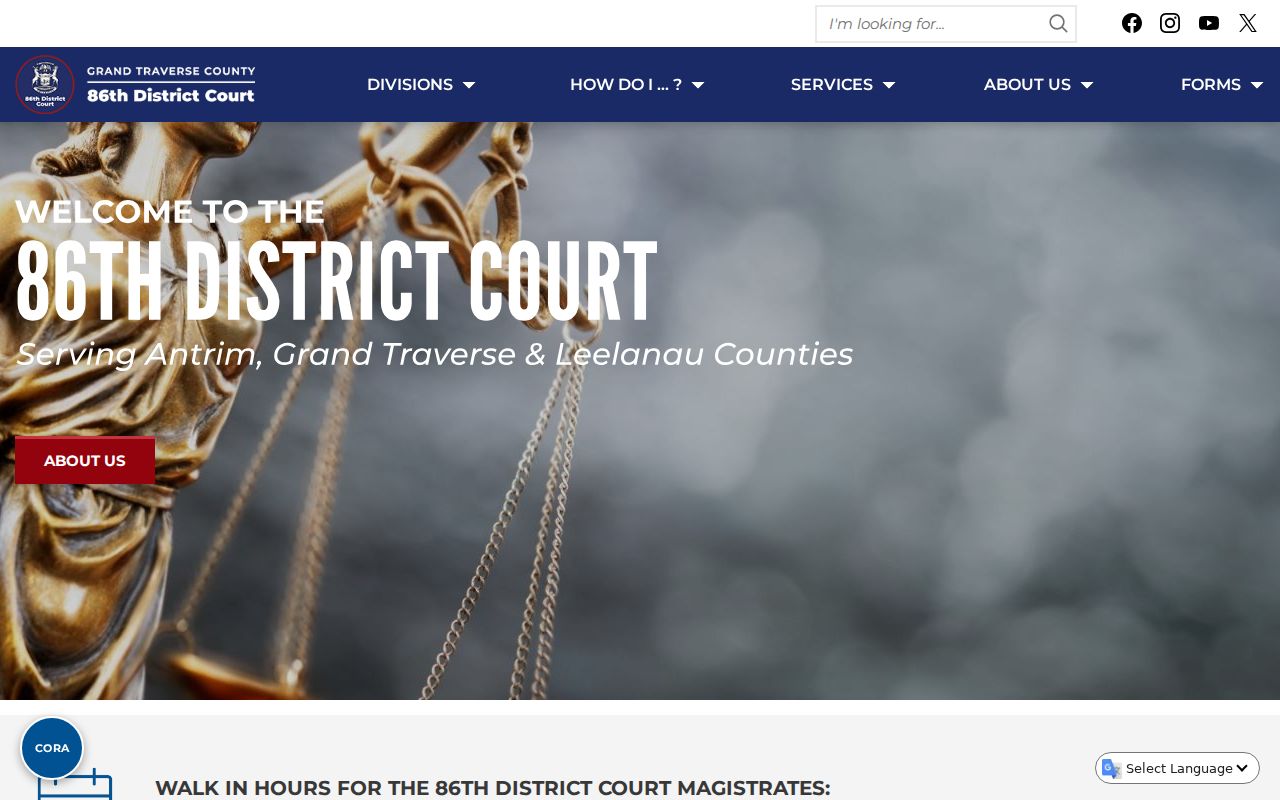
A driver can ask whether that window fits the case, and the court decides.
Grand Traverse County Traffic Warrant Ticket Search
The state ticket portal opens with a county and court picker, then offers four ways to identify a citation. It never reports warrant status for Grand Traverse County.
| Method | What It Asks For |
|---|---|
| Name and ticket | Last name plus the citation number |
| Name and birth date | Last name plus month, day, and year |
| License and state | Driver license number plus issuing state |
| Plate and state | License plate number plus state |
The district court ticket search warns that it goes offline for maintenance.
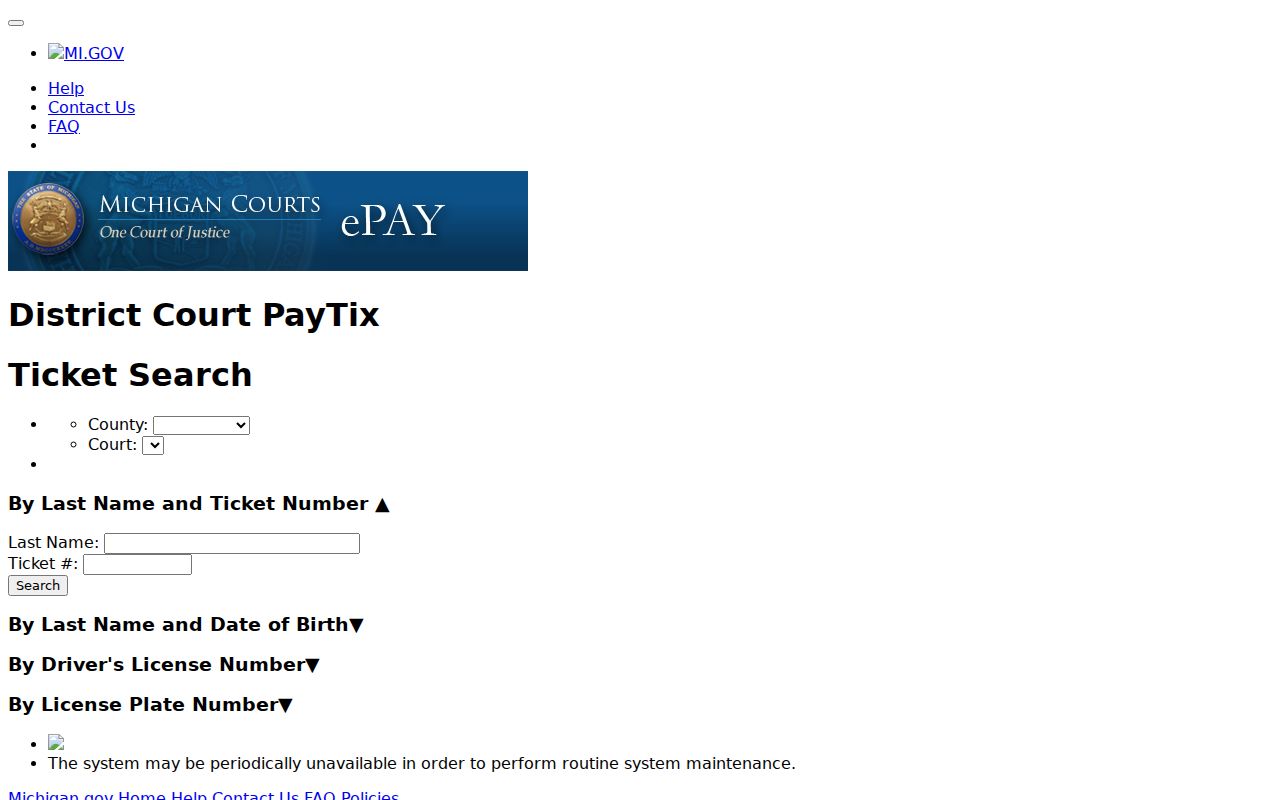
Treat the result as a locator. It names the court holding the Grand Traverse County case, and the clerk explains the rest.
Inside a Traffic Warrant Record
No Grand Traverse County page publishes traffic warrants in a fixed layout. The court file holds the events. A request is built on a case number, a party name, or a party name with a protected birth date.
| Ticket or case number | The citation identifier, often shaped like TR-2025-04817 |
|---|---|
| Issuing court | The 86th District Court for nearly every local traffic matter |
| Charge or event | The civil infraction, misdemeanor, or failure to appear |
| Judgment and fees | Any default judgment, fine, or cost the court assessed |
| Status entry | The register line showing a warrant, recall, or dismissal |
A license number and a full birth date are protected identifiers. The district file-review request explains who in Grand Traverse County may see them.
Confirmation Limits on Grand Traverse County Warrants
The common mistake with a Grand Traverse County traffic warrant is treating a payment screen as a status check. The portal collects money for payable tickets. It does not say whether a judge signed an order, and local records carry their own limits. The county search page states that its public criminal search omits some cases under Public Act 193 of 2020, and the district court has paused extraction of criminal cases while records are reconciled. Civil infractions stay visible, so a payable ticket can still hide a warrant in a related file. A blank result is a prompt, not an answer. Call the court with the ticket number and ask what the file shows today. When a ticket is missing or no longer payable, assume the case moved forward and ask which event came next. Note: A ticket that vanishes from the portal usually means the case advanced, not that it ended.
How to Pay or Lift a Grand Traverse County Traffic Warrant
Paying a fine and lifting a warrant are two acts. Money settles the judgment; only the Grand Traverse County court clears the order. Ask the clerk which path fits and get the instruction on the record.
Watch the payment destination: the district court warns that its bond remote must not be used for traffic tickets or ordinary criminal payments. Confirm the amount and the counter first.
Most Grand Traverse County resolutions run through a payment, a new date, a show-cause hearing, or a bond securing the next appearance. If the court directs a surrender, call Corrections on Washington Street first. The county publishes separate routes for district court bond and for jail bond by phone, kiosk, or online account. A receipt proves payment, not the recall.
A Missed Date and Grand Traverse County Traffic Warrants
A Grand Traverse County driver who realizes a date has passed should call before assuming the worst. The grace period may still be open. Even an entered warrant can often be handled with a new date.
- Is the case still payable, or past the payment window?
- Did the court enter a show-cause order, default, or bench warrant?
- What is the warrant date, and is it executable today?
- Can the matter be reset or heard at the magistrate window?
- Is a bond required, and where is it paid?
- Does a license sanction need separate clearance?
Case number, warrant date, next appearance, and bond amount are the facts a Grand Traverse County attorney will ask for.
Traffic Warrants, FTA, and License Holds
One unanswered Grand Traverse County citation can trigger three separate consequences. Keeping them apart stops a driver from paying the wrong counter.
| Event | What It Is | Who Controls It |
|---|---|---|
| Failure to appear | A recorded missed date or answer | The 86th District Court |
| Bench warrant | The judge's order to bring the driver in | The 86th District Court |
| Default judgment | A civil-infraction judgment after no response | The court, with payment to the court |
| License action | A clearance tied to court noncompliance | The Secretary of State, after the court reports |
MCL 257.321a describes how noncompliance reaches the driver record. State Clean Slate material notes some old clearances were handled by law. Neither cancels an open Grand Traverse County case, so clear the court side first.
Relief for Grand Traverse County Traffic Warrants
Grand Traverse County runs a problem-solving court that can end certain district court warrants for people who are homeless or at risk of homelessness. It began in 2017. The district court, the prosecutor, the sheriff, and city police all take part.
Program terms: participants work with a provider for six to eighteen months and attend hearings every other month at Safe Harbor. Relief can include dismissing bench warrants and setting aside defaults.
Eligibility is narrow. Applications route through providers, most participants need a period of services first, and restitution is not forgiven. The program page and its guidelines list the limits. A village or city hall in Grand Traverse County cannot recall the court order behind municipal warrant questions.