
Grand Traverse County Municipal Court Warrants
A municipal warrant is an order a city court issues in its own citation case. Grand Traverse County has no court of that kind. Local cases run through the 86th District Court, which handles ordinance, misdemeanor, and traffic matters for Grand Traverse, Antrim, and Leelanau counties, and a judge there issues the same warrant a city court would issue elsewhere. Note: Ask for the exact docket label, because local records say "bench warrant," not "capias."
Grand Traverse County Uses the 86th District Court for Local Ordinances
Grand Traverse County holds one city, two villages, and thirteen townships, and none runs a court. Enforcement stops at the citation. The case that follows belongs to the district court.
Ordinance flow: city or village citation › 86th District Court docket › missed date or unpaid judgment › show cause or bench warrant › payment, new date, or recall.
The Traverse City governmental center takes care of permits and parking and other city business. For a court question, staff there point callers in Grand Traverse County to the district court.
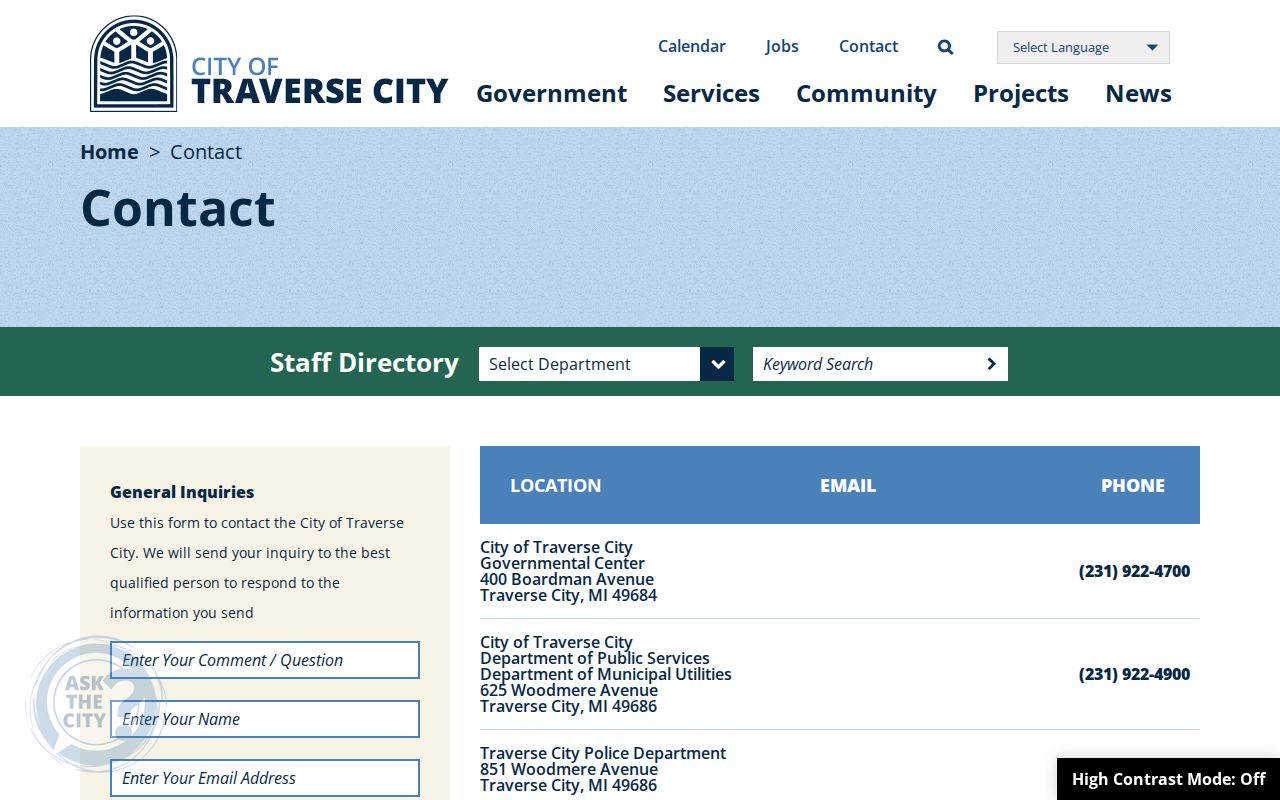
That handoff is the local pattern in Grand Traverse County. A city counter explains a citation; only the court explains a warrant.
Grand Traverse County Cities With Municipal Courts
The list in Grand Traverse County is short. No incorporated place publishes a municipal court or a city warrant portal, and both villages rely on county policing.
| Place | Court That Hears Its Ordinance Cases | Local Police |
|---|---|---|
| Traverse City | 86th District Court | Traverse City Police Department |
| Kingsley village | 86th District Court | No village department located |
| Fife Lake village | 86th District Court | County sheriff coverage |
| Townships | 86th District Court | County sheriff coverage |
The 86th District Court hears cases from three counties, so confirm your warrant matter is filed under Grand Traverse County.
Why Village Hall Cannot Confirm a Grand Traverse County Warrant
The common local mix-up is a call to a village clerk about a court warrant. Those are separate offices in Grand Traverse County with separate records. Kingsley's village departments page lists manager, treasurer, clerk, and public-works contacts, with no court or police counter. Fife Lake's village contact page points to county sheriff policing and a community deputy, so enforcement questions go to the county, not a village docket. A village clerk can confirm a village record like a utility account. Only the issuing court can clear a warrant.
Checking a Municipal Court Warrant
Because the local court in Grand Traverse County is a district court, the check runs through district court channels first. Law-enforcement records come second.
- Read the citation for the court name and the appearance date.
- Use the statewide court case search for a first look at the docket.
- Call the 86th District Court at 231-922-4580 about a default or bench warrant.
- Request the district file copy when the docket does not show the order.
- Use a Michigan FOIA request for a city or sheriff report.
A Grand Traverse County citation can be paid and still leave a warrant if the payment arrived after the court acted.
Grand Traverse County Warrant Records: City vs Court
An ordinance case in Grand Traverse County can touch two record systems, and each answers a different question. The police report shows what an officer saw. The court file shows what the judge did.
| City police report | Held by the department that wrote it, released through a FOIA request |
|---|---|
| Citation and ticket record | Held by the issuing agency and the district court |
| Ordinance case file | Held by the 86th District Court and reviewed by case number |
| Warrant event | Recorded in the court register, not in a police database |
Traverse City Police take records questions through the lobby and county central records, and the police FAQ sends court questions to the district civil clerk.
Inside a Municipal Court Warrant
A Grand Traverse County ordinance warrant sits in an ordinary court file. Its useful fields match a district case, not a special city format.
| Case number | The district court file, looked up with a case year and number |
|---|---|
| Ordinance or charge | The city or village code section named on the citation |
| Issuing court | The 86th District Court, which replaced a local city court here |
| Fine, cost, or bond | Set by the court and confirmed with the court before payment |
| Status entry | The register line showing a default, a warrant, a recall, or a dismissal |
Citation numbers vary by issuing agency, so read the one printed on the notice.
From Ordinance Citation to Grand Traverse County Warrant
Most local citations follow a predictable sequence. The officer writes the ticket. The court sets an answer date, and the case resolves through payment or an appearance. A missed date creates the warrant. Traverse City parking tickets show the split clearly: the city's parking appeals page allows an initial contest within 15 days, a second-level review by the parking director, and a request to move it to the district court magistrate within ten days. Once a warrant exists, parking services cannot undo it. Only the Grand Traverse County court can.
How to Resolve a Municipal Court Warrant
Resolution follows the same path a district court case follows, because that is the court holding the Grand Traverse County file. The clerk can describe the options. The judge decides which one applies.
Do not pay blind: a fine payment, a bond, and a recall are separate actions. Confirm the amount, the destination, and what the payment is meant to settle.
A defendant can ask for a new date, a show-cause hearing, a payment plan, or a motion to recall. If the court orders a surrender, Corrections handles booking and release questions, and county booking and warrant-processing charges may apply. Traffic citations follow the same structure in Grand Traverse County, and the steps on the traffic warrant search page apply to a city ticket that reached the district court.
A Missing Grand Traverse County Ordinance Warrant Case
A blank result does not mean the Grand Traverse County case vanished. District court criminal data has known gaps, and an ordinance matter may sit under a different party or case year.
- Recheck the search with the exact surname spelling from the citation.
- Try the case year alone if the case number was misread.
- Ask the court whether the matter is a civil infraction rather than a criminal case.
- Ask whether the record is sealed or otherwise nonpublic.
- Request a file copy or call the clerk for the register entry.
Some Grand Traverse County city records stay with the agency that wrote the ticket. A police records request sometimes answers what the docket does not.
Grand Traverse County Municipal Warrant Access Rules
Court records and agency records in Grand Traverse County follow different rules. Knowing which law governs a request keeps it from going to the wrong office.
Key rules: Michigan's Freedom of Information Act covers county and city agency records. Court files follow the Michigan Court Rules instead, including MCR 8.119 on public access.
Juvenile matters add their own protection under MCL 712A.28, and a sealed or nonpublic file will not surface in an ordinary search. The district file-review request and the sheriff FOIA form are the two documented request routes for local Grand Traverse County city cases. Warrant roundups and curated wanted lists follow their own rules, which the most wanted list page covers.