
Grand Traverse County's Most Wanted Program
A most wanted program is a curated public notice, nothing more. An agency picks a handful of cases from its open warrants, posts a short profile of each, and asks the public for information. It is a tip tool, not a warrant inventory. Grand Traverse County publishes nothing of the kind. The sheriff's official pages describe divisions, records services, and a release-of-information function, and the site carries an anonymous tip route. A warranted-person roster is not among them. That distinction matters. A curated notice and a full warrant list answer different questions, and this county offers neither as a public roster, so a reader with a case question goes to the courts rather than to a list.
How the Most Wanted Lists Work
Where these lists exist, selectivity is the whole design. An agency weighs cases by severity, by how long someone has been sought, or by a public-safety concern. Then it refreshes the page on its own schedule. Nothing about the process is automatic. That same selectivity makes a list a poor status check. A missing name proves nothing about whether a case exists, and a listed name is a request for tips, not a court finding. A roundup announcement deserves the same caution, since it reports an event rather than a record. Grand Traverse County posts no reward schedule, no update cadence, and no roster count. Any figure quoted on an outside page is unverified here.
Why Grand Traverse County Has No Most Wanted Roster
Grand Traverse County spreads its warrant work across several offices on purpose. Court indexes show the cases. The sheriff and city police serve the process. Corrections handles custody, and a records request reaches anything never posted. No single office was built to publish a wanted list. The structure explains the gap. A felony case lands in the circuit index after bindover, a misdemeanor or ordinance case sits with the district court, and a family matter belongs to the Friend of the Court. One public roster would mean merging systems that were never designed to merge.
Reporting a Tip Safely
A tip works best when it is specific and simple. Say what you saw, where, and when. Give the Grand Traverse County agency a way to reach you if you are willing. Do not approach anyone you believe is wanted, and never post identifying details in public.
Where a tip goes: the sheriff's non-emergency line at 231-922-4550, the agency records route, or emergency dispatch at 911 when a situation is happening now.
Anonymous routes exist for tipsters who want no name attached. Use them exactly as labeled. A Grand Traverse County tip line is not a warrant counter: staff can take information, but they cannot clear a case or confirm a person's status.
Grand Traverse County Most Wanted Tip Routes
Several desks answer the phone at the Grand Traverse County sheriff's office, and each handles a different kind of call. A question sent to the wrong desk is the most common reason a caller gets bounced. Know which one you need before dialing.
| Emergency | 911 for a crime in progress or an immediate danger |
|---|---|
| Non-emergency dispatch | 231-922-4550 for a situation that is not an emergency |
| Detective Bureau | 231-995-5002 for follow-up on an investigation |
| Central Records | 231-995-5005 for records and release-of-information questions |
| Sheriff's Office main line | 231-995-5000 for general agency routing |
The official Sheriff's Office page lists the agency contacts and divisions behind these routes.
Most Wanted Lists vs Active Warrants
People use the two terms as if they were interchangeable. They are not. The difference decides which Grand Traverse County office a reader should call.
| Item | What It Covers | Who Maintains It |
|---|---|---|
| Most wanted list | A small, selected set of cases with a tip request | The agency that publishes the page |
| Active warrant | A court order that can still be executed | The court that issued it |
| Case index | Filings and events in a court file | The court and its clerk |
| Custody record | Whether a person is in jail now | The county corrections division |
A tip page never substitutes for the issuing court. For the status question, the outstanding warrants page covers it in more detail for Grand Traverse County.
Grand Traverse County Most Wanted Links and Limits
Read the sheriff's site as a service directory, not a search tool. It documents who to contact for records, investigations, and custody in Grand Traverse County, and it offers a way to pass along information. Michigan's Freedom of Information Act is the route to an existing agency record, and the county's FOIA request page carries the form along with the response rules.
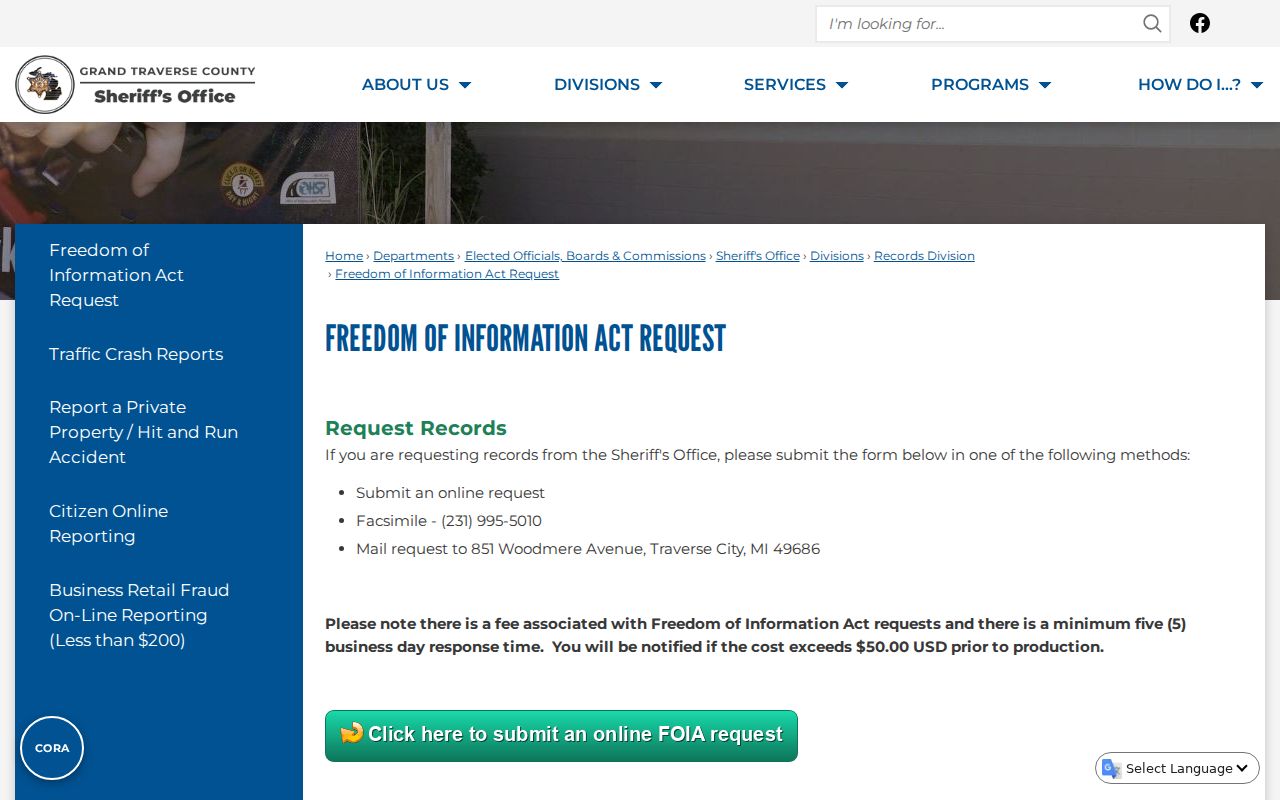
Grand Traverse County answers within five business days. One ten-business-day extension is allowed, and fees apply before release. Name a specific record in the request, not a legal question for the agency to decide.
If You Think You Are on a List
Begin by asking whether a court case exists, because that is what carries consequences. A mention on an outside page or a social post proves nothing about a Grand Traverse County file.
Do not wait on a listing: call the issuing court, speak with a lawyer before any surrender, and keep your own copies of every record you receive.
A confirmed warrant calls for real steps. The county warrant records home page lays them out in order for Grand Traverse County: counsel, voluntary appearance, bond, and recall.
Confirming a Grand Traverse County Warrant Lead
Aggregator sites and social pages copy stale information. A copied name is not a record, so treat any outside mention of a Grand Traverse County warrant as a lead that needs confirmation.
- Ask which court issued the order and when.
- Ask for the case number behind the claim.
- Check whether the matter is sealed, juvenile, or otherwise nonpublic.
- Confirm the answer with the issuing court, not the source page.
- Report harassment or a false posting to the agency that serves your area.
Lower-court and recent matters often leave a public docket blank. A missing case never settles the Grand Traverse County question.
Michigan LEIN and Grand Traverse County Wanted Searches
Michigan keeps its wanted-person records inside LEIN, a law-enforcement network closed to the public. Only criminal justice agencies can query it. That means no statewide warrant lookup exists for residents. Grand Traverse County offers case tools instead. The 13th Circuit felony index reaches bound-over cases filed back to 1981, while MiCOURT covers case types that differ by court. Neither one lists active warrants, though both show what a case has become. Federal fugitive matters belong to the U.S. Marshals Service, not county records.